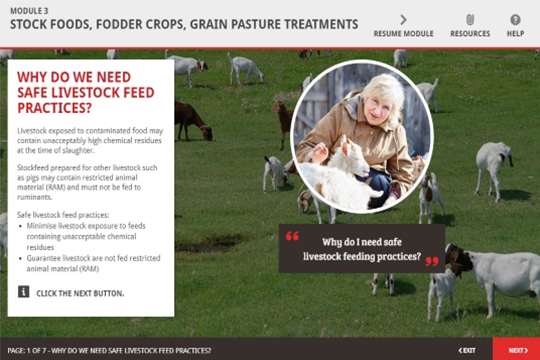
LPA Learning
Consolidate your knowledge on Stock foods, fodder crops, grain and pasture treatments by completing this LPA Learning module.
How can producers meet this LPA requirement?
To comply with the requirements of safe animal feed, livestock owners must:
Why do we need safe livestock feed practices?
As a livestock producer you must guarantee that animals are not exposed to foods containing chemical contamination or fed animal products.
Livestock exposed to contaminated food may contain high chemical residues at the time of slaughter, compromising food safety and harming the reputation of Australian red meat. To ensure we meet customer expectations, livestock owners must undertake safe livestock feed practices, including:
Repercussions for non-compliance may include failure to be paid for the livestock, and possible legal liability for the resulting cost faced by processors and the rest of the supply chain.
Livestock producers must:
All introduced stock feeds should be accompanied by a Commodity Vendor Declaration (CVD) to guarantee that the feed purchased is safe from chemical contamination.
The CVD needs to provide details of:
CVD’s completed through the National Grower Register (NGR) system are accepted under LPA.
In the absence of a CVD you need to assess the risk (and keep a record of same). Alternatively, you can have a sample tested for residues.
Consolidate your knowledge on Stock foods, fodder crops, grain and pasture treatments by completing this LPA Learning module.
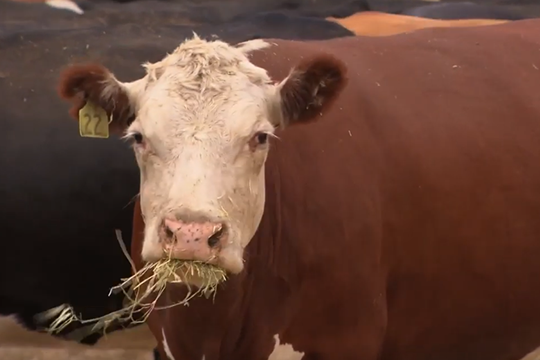
Watch this video to understand how to avoid exposure of livestock to foods containing unacceptable chemical contamination or animal products.
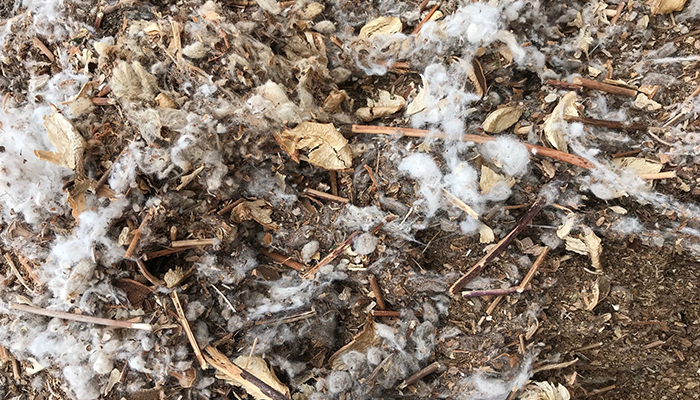
Livestock Production Assurance (LPA) accredited livestock producers are now able to feed their livestock cotton trash or use cotton trash as mulch under a strict protocol developed industry.
Restricted animal material (RAM) includes meat, meat and bone meal, blood meal, blood and bone meal, dog biscuits, poultry offal meal, feather meal, fishmeal or any other animal meals or manures to livestock.
The feeding of RAM to ruminant animals has been linked to the spread of Bovine Spongiform Encephalopathy (BSE). Livestock should not be fed such products.
To minimise the risk of contaminating our meat supply, it is important to keep and store products that may contain RAM separate from feed that will be fed to ruminant livestock.
LPA-accredited producers are now able to feed their livestock cotton trash or use cotton trash as mulch under a strict protocol developed by industry. The availability is dictated by the cotton gins and is only available from gins approved by the cotton industry.
Read the list of approved cotton gins here.
Read more about LPA alternative feedstuffs or download a cotton trash fact sheet for more information.
A declaration must be completed for every order of cotton trash. Download the declaration.
Feeding cotton trash does impact a PIC, even if only some of your livestock have had access, every animal registered to that PIC will be considered to have accessed cotton trash. As a result, all animals registered to that PIC are automatically allocated a cotton trash animal (CTA) status on the central NLIS database. All animals are required to complete a 60-day clean feed period before going to slaughter or export. This can occur in two ways, an approved auditor verifies the PIC is clear and no longer feeding cotton trash via an on-farm audit, or if livestock are moved to a clean PIC, and the 60 day clean feed period will automatically initiate once the movement is recorded on the central NLIS database.
If livestock that have been fed cotton trash are slaughtered prior to the completion of the clean feed period, there is a risk of chemical residue levels exceeding those stipulated by market access requirements. There are also commercial risks in feeding by-products, like cotton trash, to livestock in that some buyers may not want to purchase such livestock.
By adhering to the protocol, producers wishing to access cotton trash will be able to maintain their LPA accreditation and the red meat industry will continue to meet the expectations of global markets.
It is recommended that before feeding cotton trash to livestock, you contact your buyer or processor and receive confirmation that they are willing to accept livestock which have had access to cotton trash.
Sheep can be fed cotton trash under the same provisions as cattle.
Through the Australian Pesticides and Veterinary Medicines Authority (APVMA) Public Chemical Registration Information System Search: https://portal.apvma.gov.au/pubcris