Search tips
- Check your spelling
- Try a different term
- Keep your search term short and simple
This clean feed period must be verified by an Approved Auditor. When the Approved Auditor is contracted is the decision of the producer, although they are encouraged to do so prior to commencing the clean feed period. The commencements of the clean feed period can occur prior to the audit being undertaken, providing that the management plan implemented by the producer provides sufficient evidence to substantiate verification that the livestock have been grazing on clean feed from the stated date, by the Approved Auditor.
Livestock must graze on clean feed for a period of 60 days before the status is removed. This clean feed period must be verified by an Approved Auditor. The commencement of the clean feed period can occur prior to the audit being undertaken, providing that the management plan implemented by the producer provides sufficient evidence to substantiate verification that the livestock have been grazing on clean feed from the stated date, by the Approved Auditor.
A producer will be required to pay an additional accreditation fee of $90 (ex GST) to be part of the Harvest Rangeland Goat module. This additional fee will cover the following: Access to the Harvested Rangeland Goat module in the LPA database including accreditation, account management, self-services for buying LPA HRG book. To cover the audit cost of the Harvested Rangeland Goat module. Access to the eNVD web platform and eNVD mobile app.
Here are four key tips to avoid the most common red meat integrity issues.
More information To help you prepare for this new method of accreditation: Review the Self-Assessment Frequently Asked Questions Read the Self-Assessment information flyer Watch the Self-Assessment video overview If you have any questions or require further assistance, please contact info@integritysystems.com.au or call the ISC Customer Service Centre on 1800 683 111 which is now open Mon-Fri (8am-7pm AEST) and Sat-Sun (9am-5pm AEST).

More information If you’re a small producer looking for guidance on complying with the LPA requirements, register to attend our Small Producer Webinar on Thursday, 21 May at 7pm. To learn more about maintaining lifetime traceability when buying, selling and moving livestock, visit the ISC website. To learn more about LPA requirements for biosecurity, visit the ISC website. For more information about LPA audits, please refer to this factsheet or assess your audit readiness by completing this checklist. If you have any further questions about your LPA accreditation and understanding how it applies to your enterprise, please email lpa@integritysystems.com.au. ...

To meet the requirements for crop, pasture and paddock treatment recording, the following information must be recorded: date of application paddock ID & location crop treated area treated treated by (name and contact number of owner/employee/contractor) treatment application rate (L/ha) and method wind direction and speed (km/hr) tank mix used product name chemical rate batch number WHP/EGI/EAFI date safe to harvest/ graze. If all this information is recorded in your spray schedule and can be accessed in a timely manner for an audit, then it is an acceptable way to record the information. This responsibility falls under the...
Join this webinar, held in partnership with Northern Territory Government and Northern Territory Cattlemen’s Association, for tips and hints on how to keep good records.

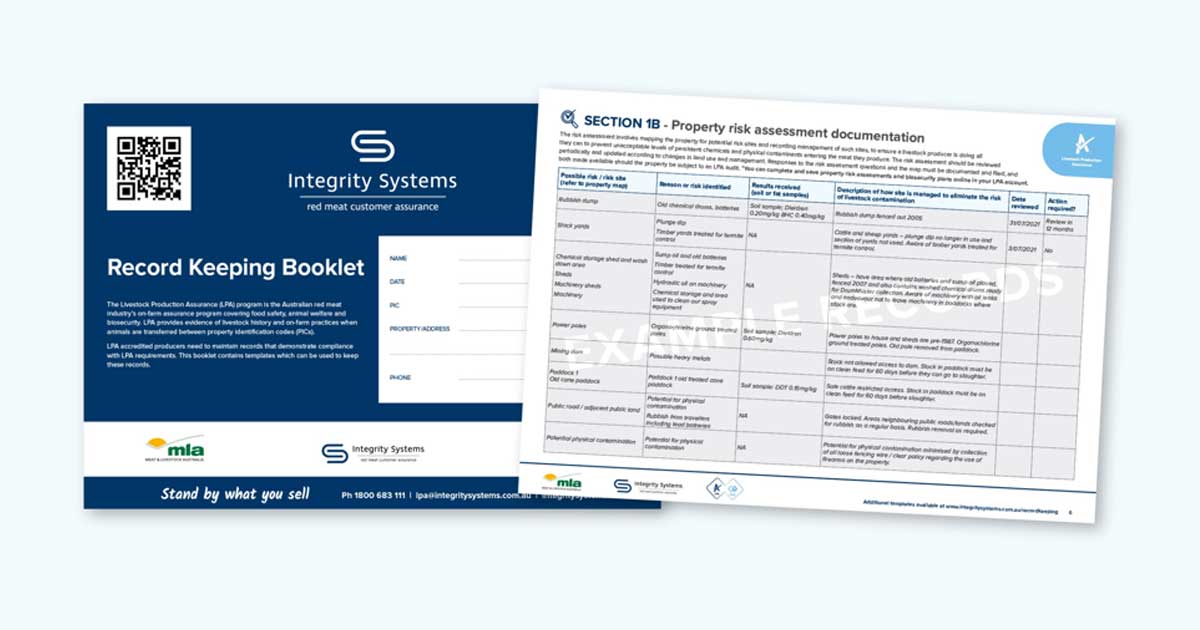
Good records and systems are the foundation of the integrity system. Find out more and download ISC’s range of free record keeping templates here.
Feeding cotton trash does impact a PIC, even if only some of your livestock have had access, every animal registered to that PIC will be considered to have accessed cotton trash. As a result, all animals registered to that PIC are automatically allocated a cotton trash animal (CTA) status on the central NLIS database. All animals are required to complete a 60-day clean feed period before going to slaughter or export. This can occur in two ways, an approved auditor verifies the PIC is clear and no longer feeding cotton trash via an on-farm audit, or if livestock are moved...