Search tips
- Check your spelling
- Try a different term
- Keep your search term short and simple
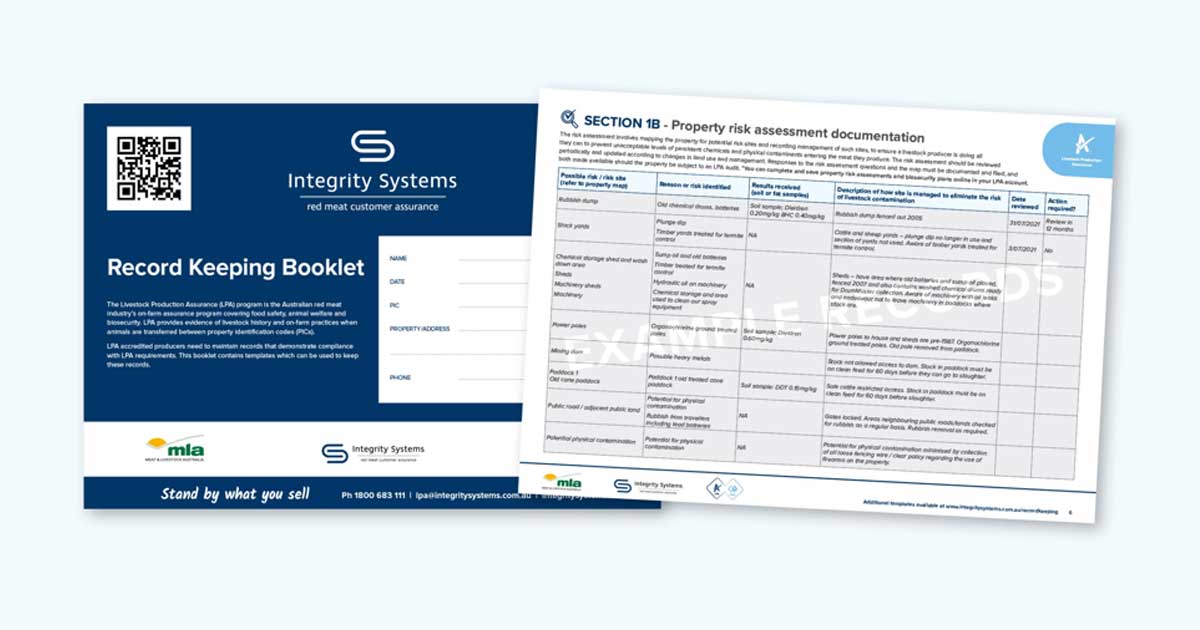
Good records and systems are the foundation of the integrity system. Find out more and download ISC’s range of free record keeping templates here.
Producers buying and selling sires this spring selling season are being urged to meet relevant requirements under the Livestock Production Assurance (LPA) and National Livestock Identification System (NLIS)

More information Subscribe to the NLIS Database Uplift Update newsletter here to receive updates and invitations to webinars on the project as it progresses. For more information visit the NLIS Database Uplift Project web page. Contact the project team at NLISUplift@integritysystems.com.au to ask questions or provide feedback. About the Project The NLIS Database Uplift Project will ensure Australia has a fit-for-purpose and user-friendly traceability platform which offers flexibility and scalability to track all livestock movements. In an era of growing consumer demands and heightened awareness surrounding biosecurity, market access, food safety and animal welfare, the need for a robust and...

An individual animal is given a ‘device-based status’ against its NLIS tag or bolus when it has a known disease or residue issue that presents a food safety or biosecurity risk and requires specific management on-farm, or at feedlots, saleyards and processors. Depending on the risk, the status is assigned by the Commonwealth or State Department, a vet or the Integrity System Company via the NLIS database. The producer is then informed. These device-based statuses automatically trigger an EW status on the PIC where the animal resides in the NLIS database. The device-based statuses that trigger the EW status are:...
Further assistance If you have any questions about completing or rectifying your NLIS transfers, please email info@integritysystems.com.au. Alternatively, you can speak with the ISC Customer Service team on 1800 683 111, Monday-Friday between 8am to 7pm (AEST) or on weekends between 9am and 5pm (AEST). You can also access the ISC Chatbot seven days a week via our website or from your myMLA and LPA account pages.

Early warning (EW) is a status within the NLIS database that is automatically assigned to a property carrying high-risk animals. It is one of several ‘property identification code (PIC)-based statuses’ assigned within the database. The EW status does not identify what the status is for or which specific animals are high-risk. The EW status helps monitor and manage food safety and biosecurity risk along the entire supply chain. It gives livestock buyers and agents forewarning of a potential risk by flagging that the PIC may have high risk animals associated with it. The buyer or agent is then able to...
Sheepvention Rural Expo 2023Visit stall number: 37 to meet our staff, and have your traceability and biosecurity questions answered. VISIT WEBSITE
Get organised and stay LPA compliant over the coming months with these suggested actions to help you get the most out of your integrity tools. ● Sheep and Goat eIDs: With mandatory electronic identification for sheep and goats coming into effect nationally from 1 January 2025, producers who haven’t already made the switch should be making preparations. For a state-by-state list of rollout dates and other key information about the sheep and goat eID national implementation plan visit the Sheep and Goat Traceability Task Force website. Check out this video to learn more about sheep and goat eIDs and the National...

The start of a new year is the perfect time to ensure you’re set up to meet your integrity requirements on-farm. Here are ISC’s top tips to get you started.